
Cool vs Warm Undertones
Understanding your undertone is the foundation of color analysis. Here's how to identify yours and why it matters.
What Are Undertones?
Your undertone is the subtle hue beneath the surface of your skin. Unlike your surface skin color (which can change with sun exposure, rosacea, or acne), your undertone is permanent and genetic.
There are three undertone categories:
Cool
Pink, red, or bluish undertones
Warm
Yellow, golden, or peachy undertones
Neutral
A mix of both cool and warm
Why it matters: Colors with undertones that match yours will make you look healthy, bright, and vibrant. Colors with opposing undertones will make you look washed out, sallow, or tired.
5 Ways to Determine Your Undertone
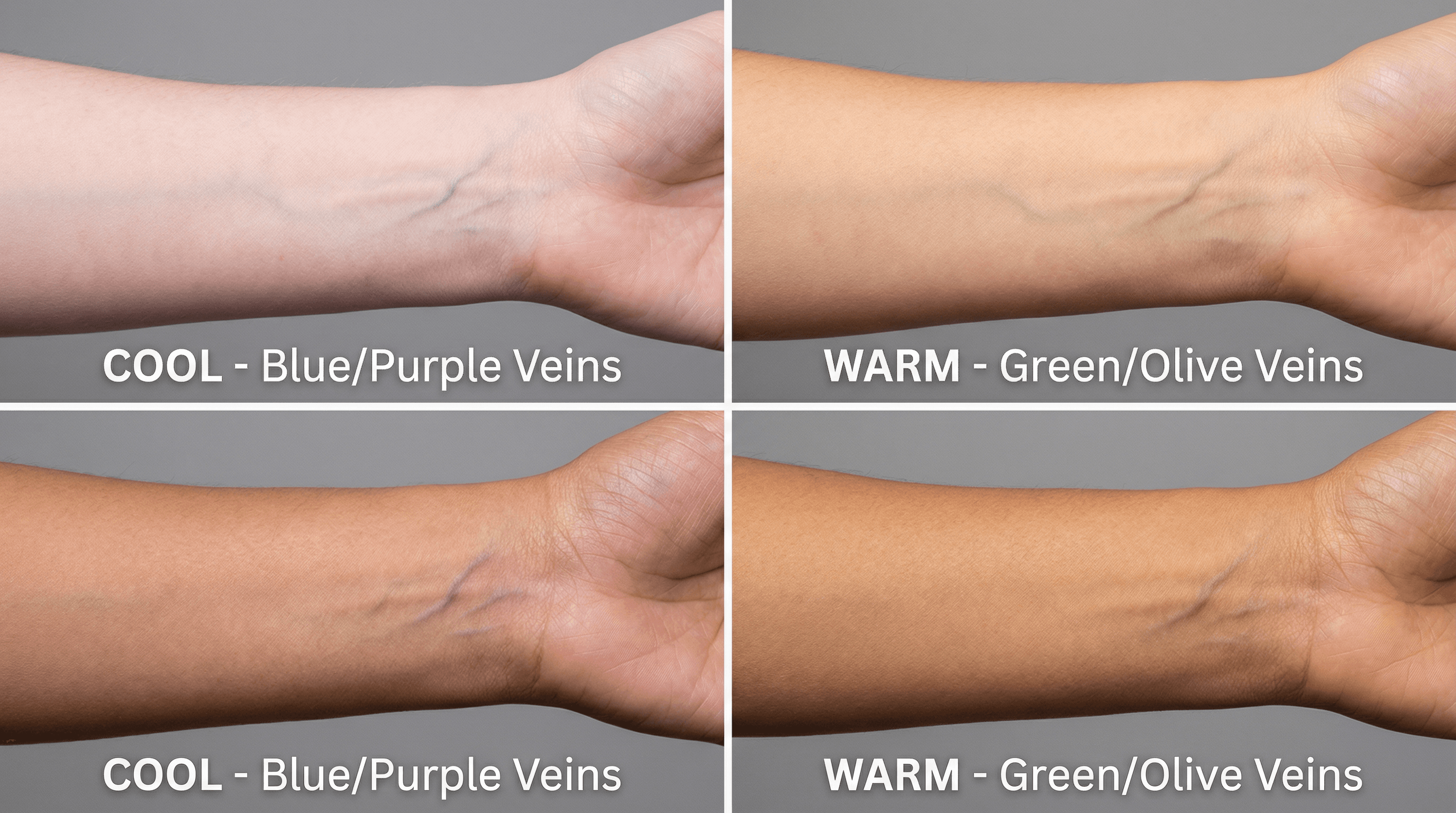
The Vein Test
Look at the veins on the inside of your wrist in natural light.
- Blue or purple veins: Cool undertone
- Green or olive veins: Warm undertone
- Mix of both or can't tell: Neutral undertone
The Jewelry Test
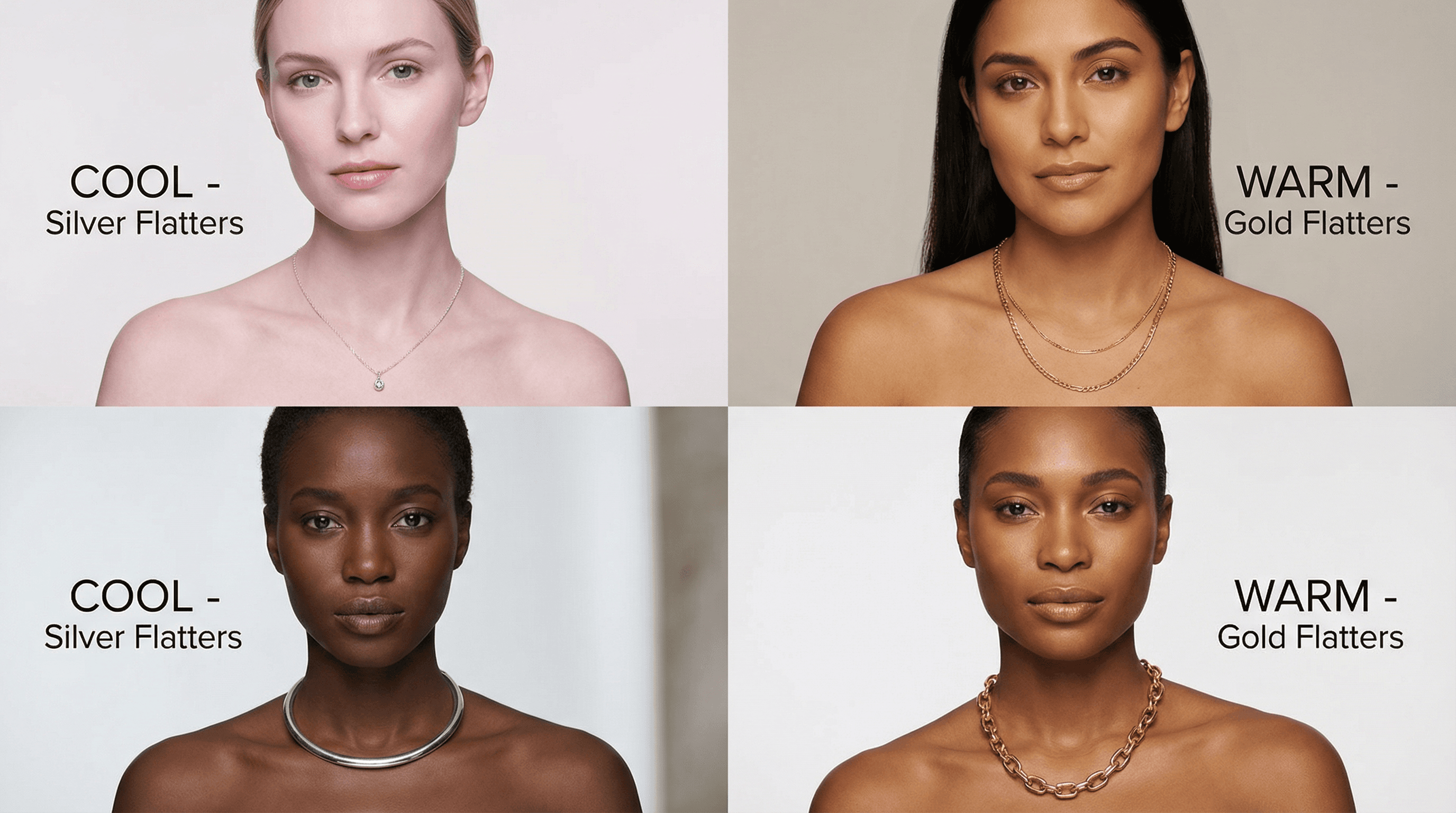
Hold silver and gold jewelry (or foil) next to your face in natural light.
- Silver looks better: Cool undertone
- Gold looks better: Warm undertone
- Both look good: Neutral undertone
The White Paper Test
Hold a pure white paper next to your bare face in natural light. Look at how your skin appears in comparison.
- Skin looks rosy, pink, or red: Cool undertone
- Skin looks golden, yellow, or peachy: Warm undertone
- Skin looks grey or greenish: Likely neutral (paper test is less reliable for neutral undertones)
The Sun Reaction Test
Think about how your skin reacts to sun exposure.
- Burn easily, tan minimally: Often cool undertone
- Tan easily, rarely burn: Often warm undertone
- Burn first, then tan: Often neutral undertone
Note: This test is less reliable than vein or jewelry tests, as sun reaction is also influenced by melanin levels.
The Color Comparison Test
Hold these colored fabrics or shirts up to your face and notice which makes your skin look healthier:
- Navy, rose pink, emerald green look best: Cool undertone
- Coral, olive green, warm red look best: Warm undertone
Common Mistakes When Determining Undertone
- ✗Looking at surface skin color: Your undertone is NOT the same as whether you have fair, medium, or dark skin. People of all skin depths can be cool, warm, or neutral.
- ✗Confusing redness with cool undertone: Rosacea, acne, or redness doesn't mean you're cool. Look deeper at the underlying hue.
- ✗Testing in bad lighting: Always use natural daylight, not artificial yellow or fluorescent lights.
- ✗Relying on just one test: Use 2-3 tests for confirmation, especially if you're neutral.
Undertone by Color Season
Cool Undertone Seasons
Warm Undertone Seasons
Let AI Identify Your Undertone
Still not sure about your undertone? Our AI color analysis quiz will determine your undertone and your exact 12-season in just 30 seconds.