
4-Season vs 12-Season Color Analysis
Understanding the difference can mean the difference between "good enough" colors and colors that make you truly glow.
Quick Comparison
| Feature | 4-Season | 12-Season |
|---|---|---|
| Number of Seasons | 4 | 12 |
| Precision | Low | High |
| Accuracy for Most People | 60-70% | 85-95% |
| Best For | Obvious coloring | Everyone, especially neutral undertones |
| Palette Size | Broad | Specific |
| Edge Cases | Forces you into a box | Accounts for nuance |
| Complexity | Very simple | Moderate |
| Used By Professionals | Rarely (outdated) | Yes (modern standard) |
The 4-Season System: Too Simple
The 4-season color analysis system was popularized in the 1980s book "Color Me Beautiful" by Carole Jackson. It divides everyone into four categories:
- Spring: Warm, light, and bright
- Summer: Cool, light, and soft
- Autumn: Warm, deep, and muted
- Winter: Cool, deep, and clear
The Problem: Most people don't fit neatly into these four boxes. What if you're warm but not particularly light OR deep? What if you're cool but have moderate contrast, not the dramatic high contrast of a true Winter?
The 4-season system forces you into the "closest match," which often means wearing colors that are close but not quite right. You might look fine, but not stunning.
The 12-Season System: Modern & Precise
The 12-season system, developed by professional color analysts, recognizes that each of the four main seasons has three variations based on your dominant characteristic:
Spring
- Light Spring (Light + Warm)
- Warm Spring (Warm + Bright)
- Clear Spring (Clear + Warm)
Summer
- Light Summer (Light + Cool)
- Cool Summer (Cool + Muted)
- Soft Summer (Soft + Cool)
Autumn
- Soft Autumn (Soft + Warm)
- Warm Autumn (Warm + Rich)
- Deep Autumn (Deep + Warm)
Winter
- Deep Winter (Deep + Cool)
- Cool Winter (Cool + Intense)
- Clear Winter (Clear + Cool)
Why This Matters: A Light Spring and a Warm Spring are both "Spring" in the 4-season system, but they need different colors. Light Spring needs delicate, pastel versions of warm colors, while Warm Spring can handle richer, more saturated warm tones.
The 12-season system gives you colors that are precisely tuned to your unique combination of undertone, value (light/dark), and chroma (bright/muted).
Visual Breakdown: 4 Seasons → 12 Sub-Seasons
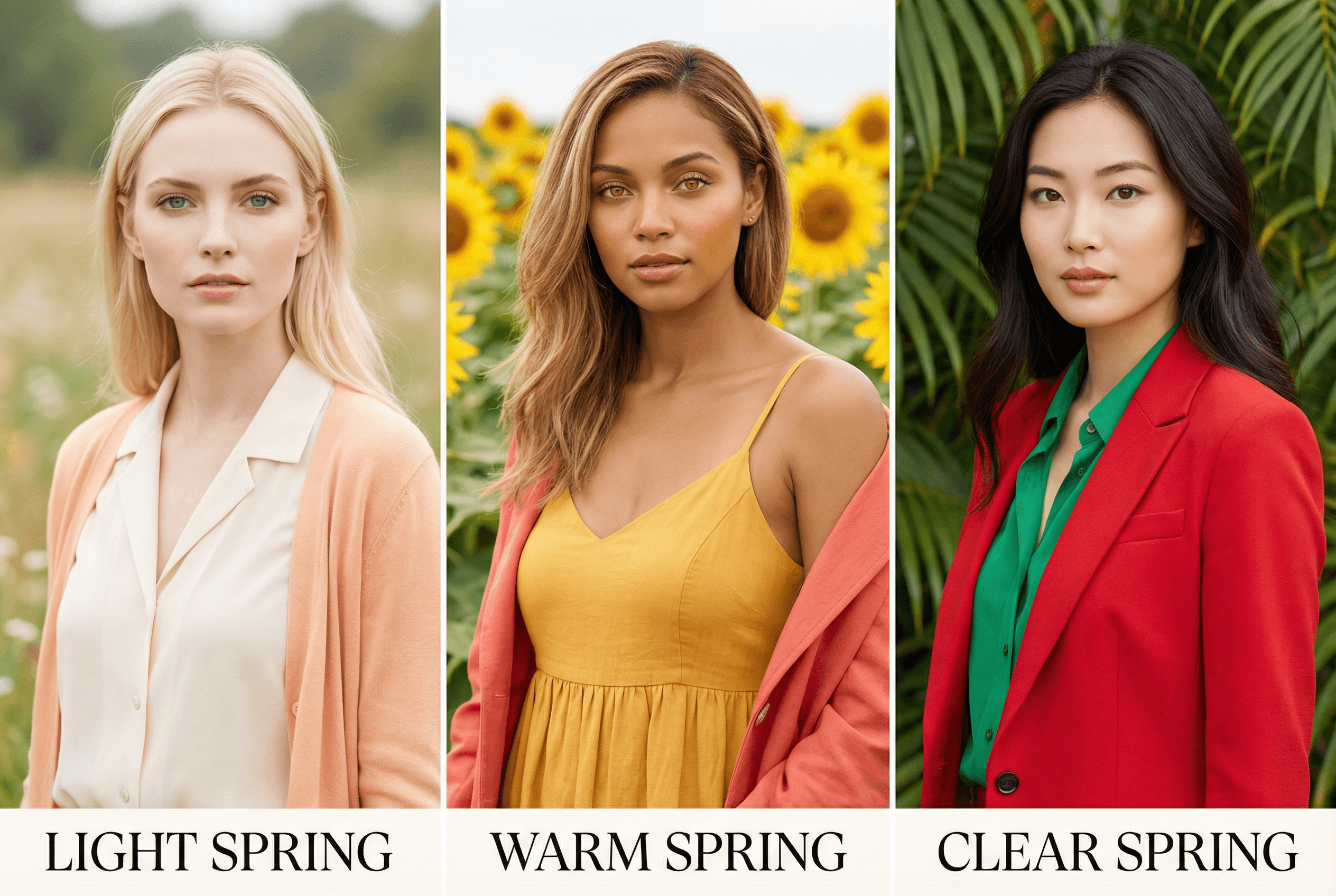
Spring: Light, Warm, and Clear variations
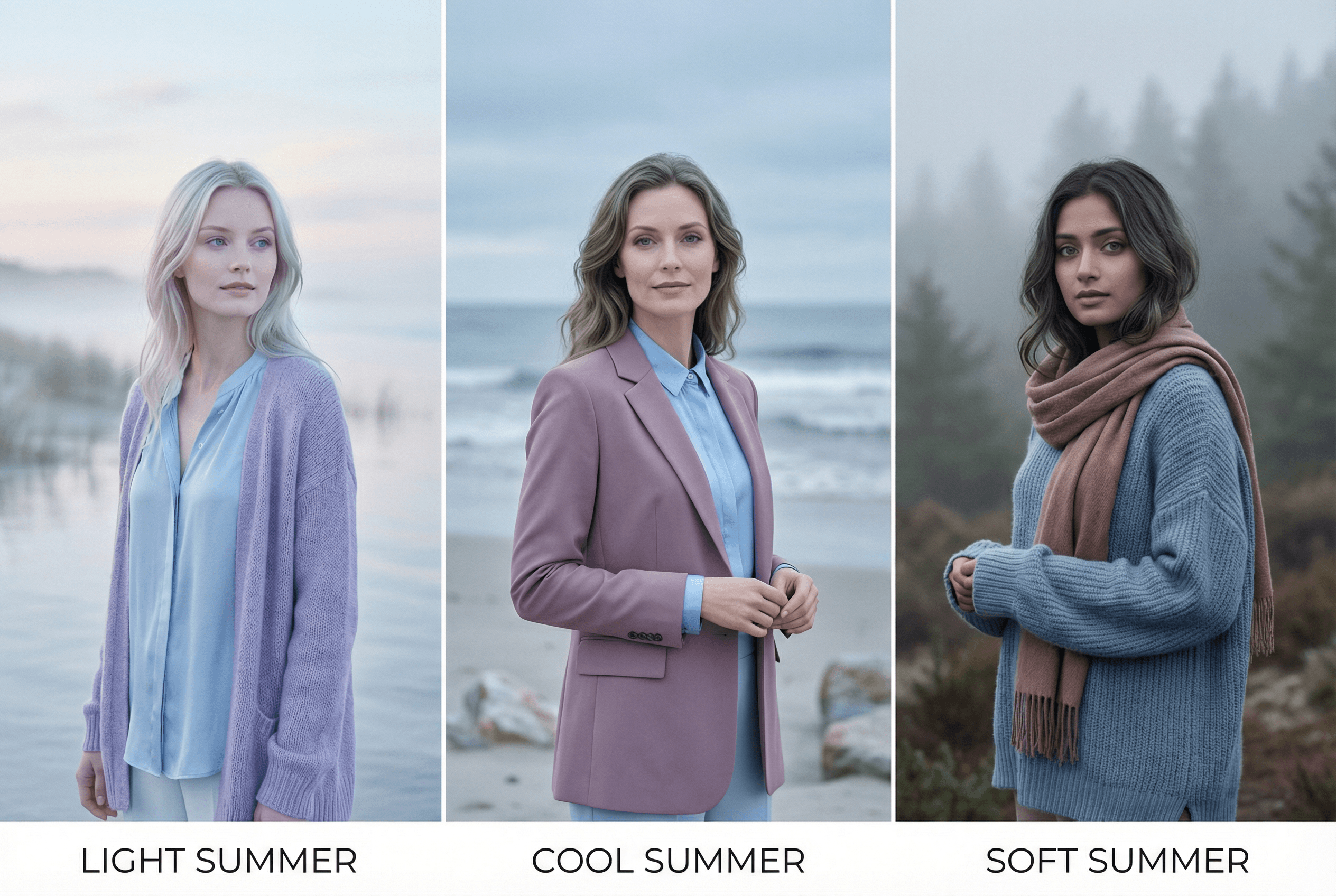
Summer: Light, Cool, and Soft variations
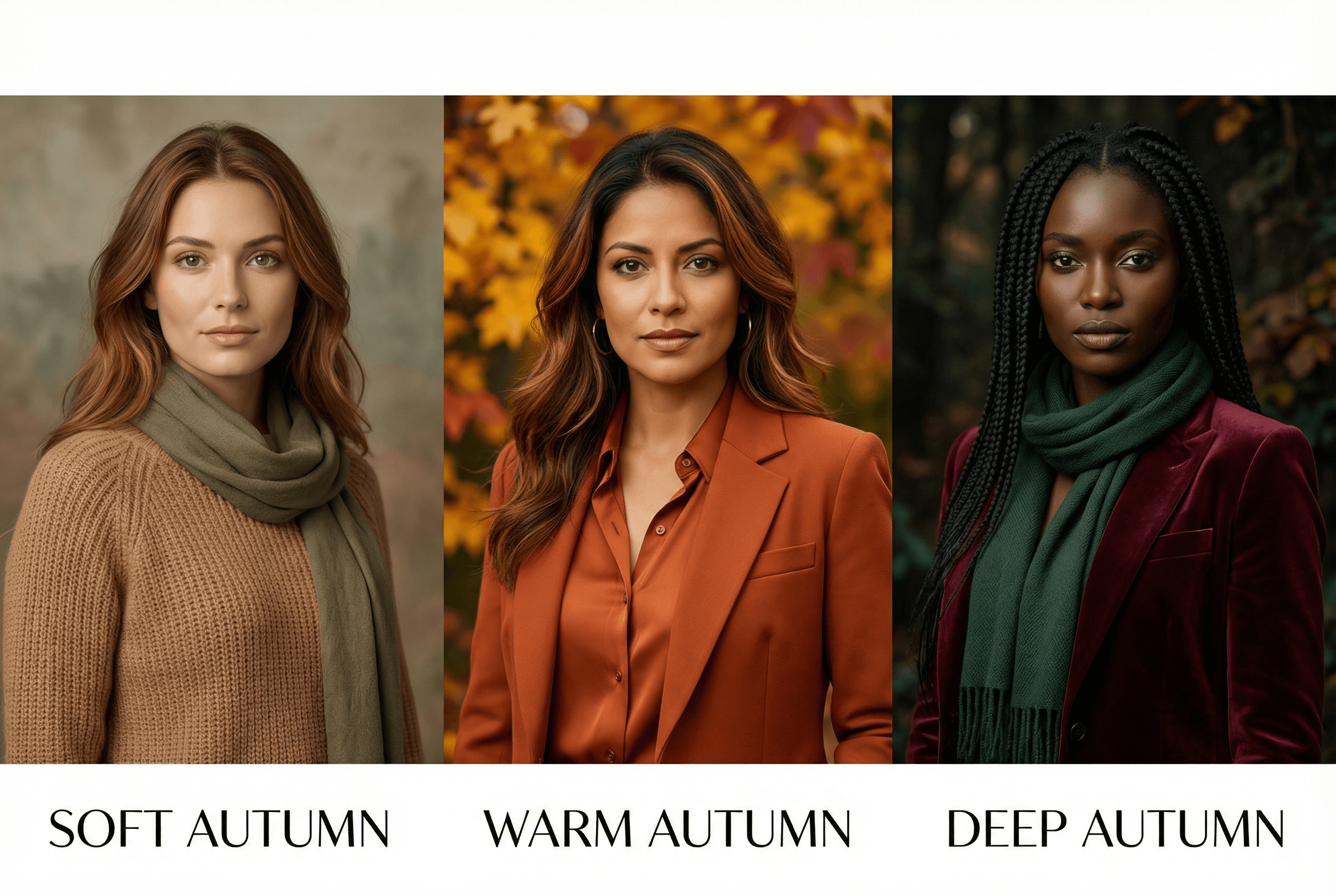
Autumn: Soft, Warm, and Deep variations

Winter: Deep, Cool, and Clear variations
Real-World Example: Why Precision Matters
Meet Sarah: She has warm undertones, medium contrast, and slightly muted coloring.
4-Season Result
"You're an Autumn. Wear rust, olive, and burnt orange."
Problem: She looks okay in these colors, but the rich, saturated Autumn colors can overwhelm her more delicate coloring. She never quite looks her best.
12-Season Result
"You're a Soft Autumn. Wear muted terracotta, sage, and warm taupe."
Solution: These softer, grayed-down versions of Autumn colors harmonize perfectly with her muted coloring. She glows.
Who Should Use Which System?
Use 4-Season If...
- You have very obvious, stereotypical coloring (e.g., porcelain skin + jet black hair = Winter)
- You're just starting to learn about color analysis
- You want a general direction but don't need precision
Use 12-Season If...
- You've tried 4-season and feel "in between" seasons
- You have neutral undertones
- You want colors that make you look your absolute best
- You're serious about building a curated wardrobe
- You want the method used by modern professionals
ColorMine Uses the 12-Season System
Our AI has been trained on thousands of professional 12-season color analyses to give you the most accurate, personalized results possible. Why settle for "close enough" when you can have precision?
Frequently Asked Questions
Can I use 4-season colors if I know my 12-season?
Yes, but be selective. If you're a Soft Autumn, you can borrow from the Autumn palette but should avoid the most saturated, rich colors. Stick to the muted, softer options within the Autumn family.
Is 12-season more expensive to get analyzed?
Professional in-person analysis costs the same ($200-500) regardless of system. However, with ColorMine AI, you get 12-season analysis for free via our quiz or with the app.
What if I still can't tell which of the 12 I am?
That's exactly what our AI is for. Take our free quiz or upload a photo in the app for instant, accurate 12-season identification. No guesswork needed.
Do professional analysts actually use 12-season?
Yes. The 12-season system (and variations like 16-season) are the modern standard. The 4-season system is considered outdated by most professional color consultants.